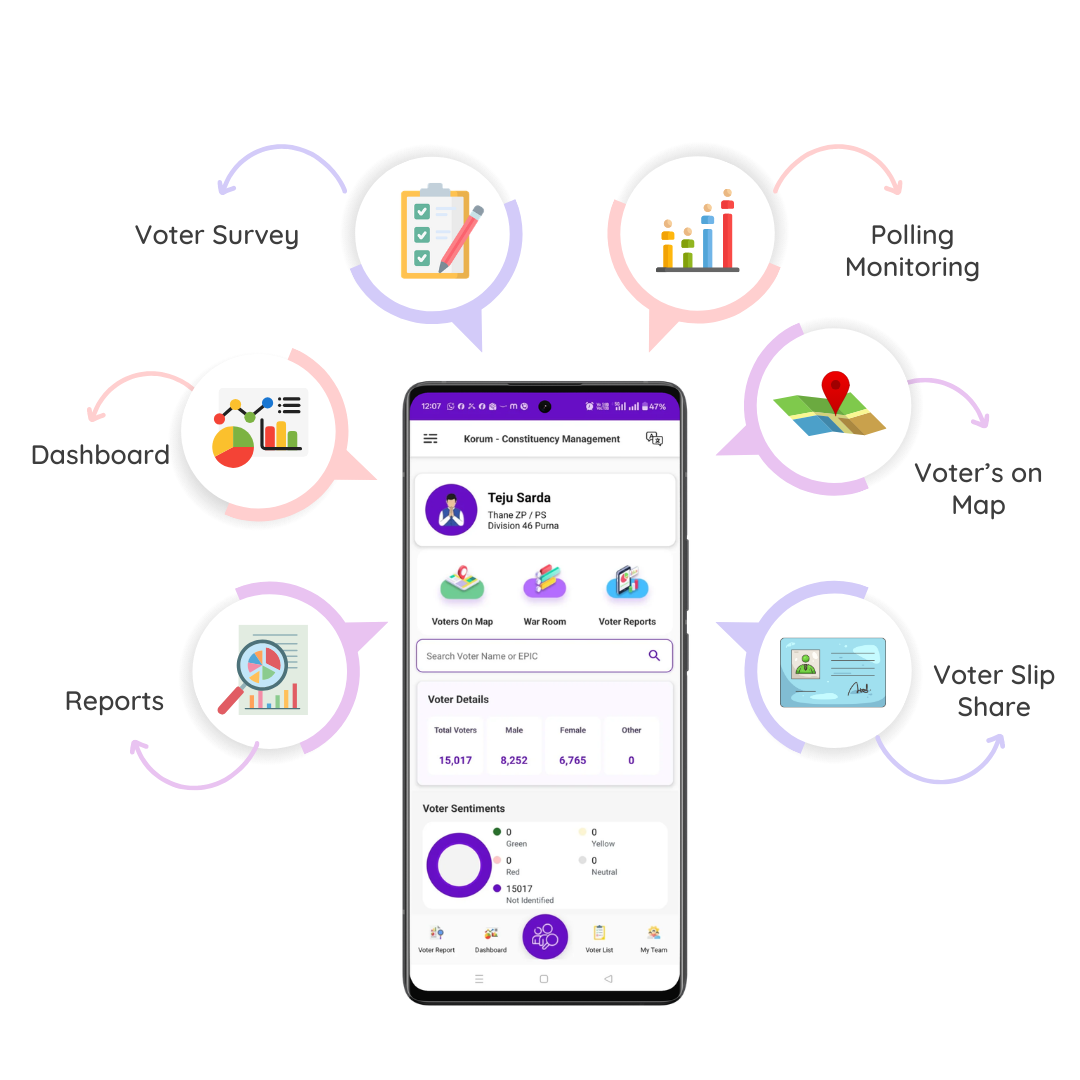
Live Polling Updates
Accurate Voter Survey
Data Protection
User-Friendly Interface
Smart voter management powered with Advanced
Voter Search, AI Contact Mapping, live War Room monitoring, Bluetooth voter slip printing,
and real-time sentiment tracking. Stay election-ready with booth analytics, polling day
control, detailed reports, and secure cloud access all in one powerful Election Management
App.

View all your supporters, including surveyed
voters, on an advanced interactive map with Korum App. Track supporter
distribution booth-wise and area-wise across your ward or constituency in real
time. Monitor voter sentiment, field progress, and team activity from one
centralised dashboard to make faster, data-driven decisions and manage
follow-ups more effectively.
View
surveyed voters and supporters with
colour-coded sentiment on the map
Navigate and reach voters easily with
location-based tracking
Get instant
booth-wise insights into supporter strength and trends
Plan visits and
follow-ups efficiently with real-time updates
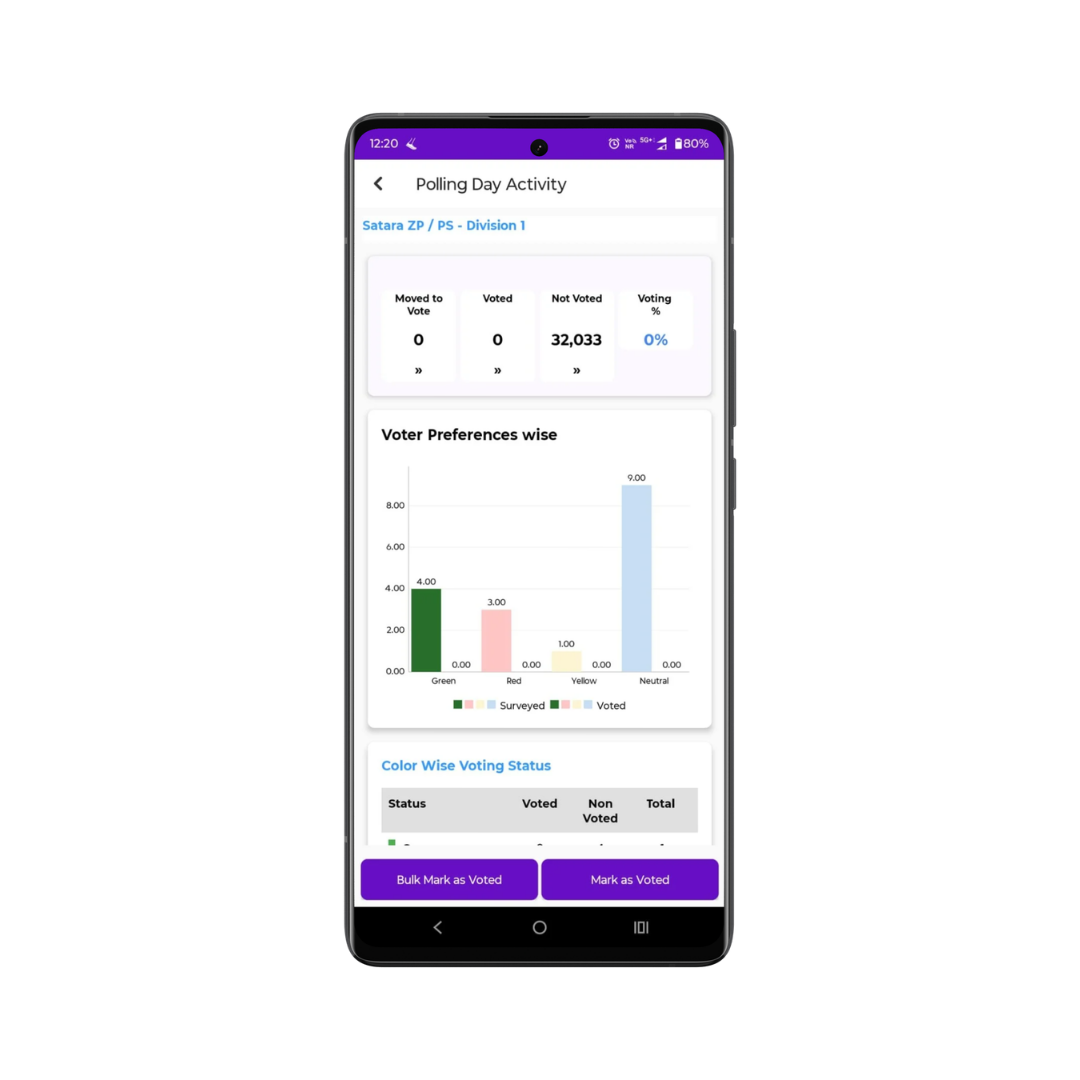
Track live voter turnout and polling activity with
Korum App, India’s leading Election Management App. Know exactly who has voted,
assign booth agents instantly, and boost voter participation with real-time
updates. Get booth-wise turnout insights and live trends to manage your election
campaign more effectively.
Monitor in real time which voters have voted and who are pending.
Assign and manage
booth agents instantly for better turnout control.
Send quick
reminders to voters who have not yet voted.
Get instant booth-level turnout updates and
live trend insights.
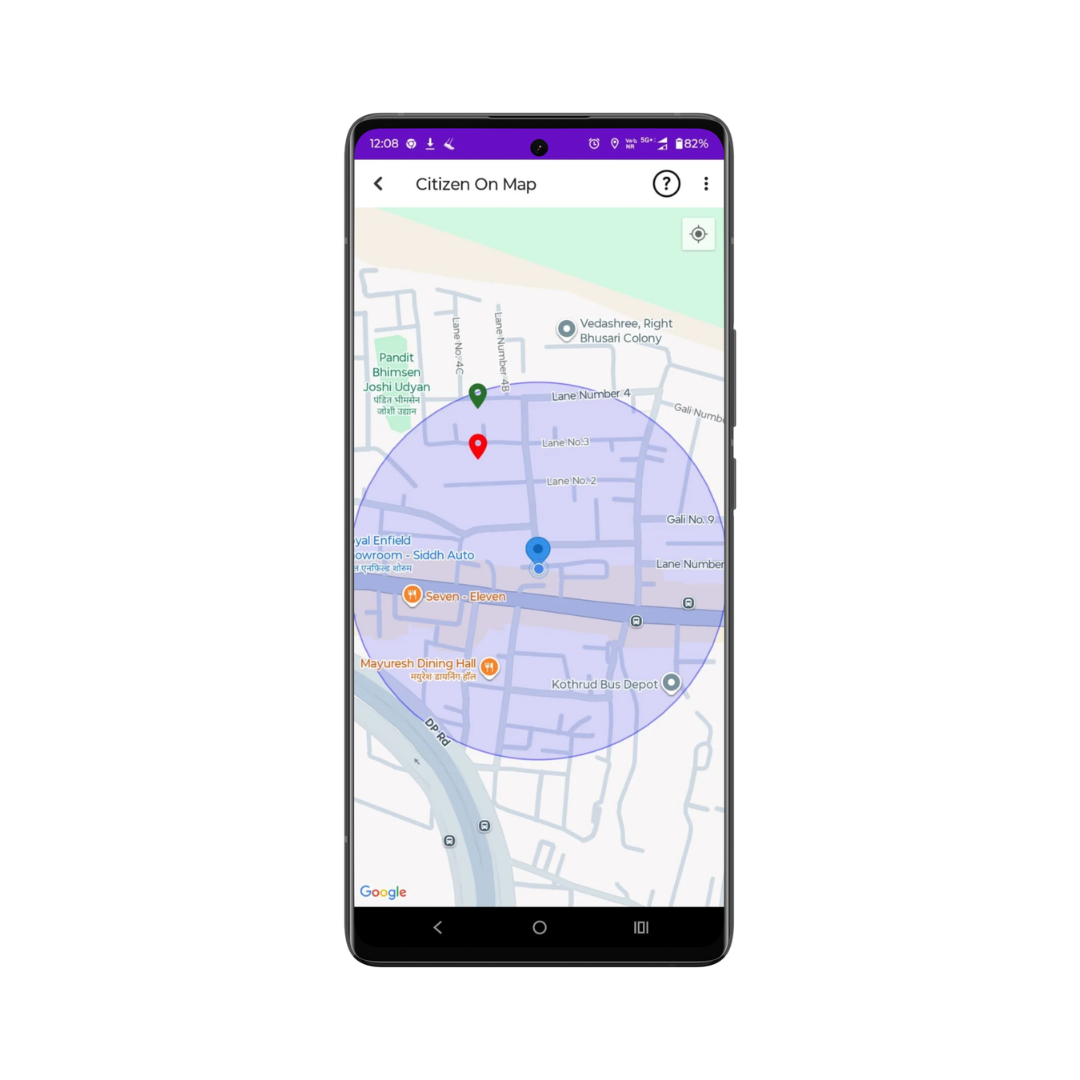
Visualise your complete voter base with Korum App,
India’s trusted Election Management App integrated with Google Maps technology.
View, filter, and analyse voters area-wise or zone-wise to plan targeted field
visits and faster follow-ups. Strengthen team coordination and improve
ground-level execution with accurate, real-time voter location
mapping.
View
all voter locations captured during detailed surveys.
Identify nearby
voters instantly for quick and efficient follow-ups.
Filter and
navigate voters easily based on area, zone, or booth.
Improve on-ground
coordination and route planning with live mapping.
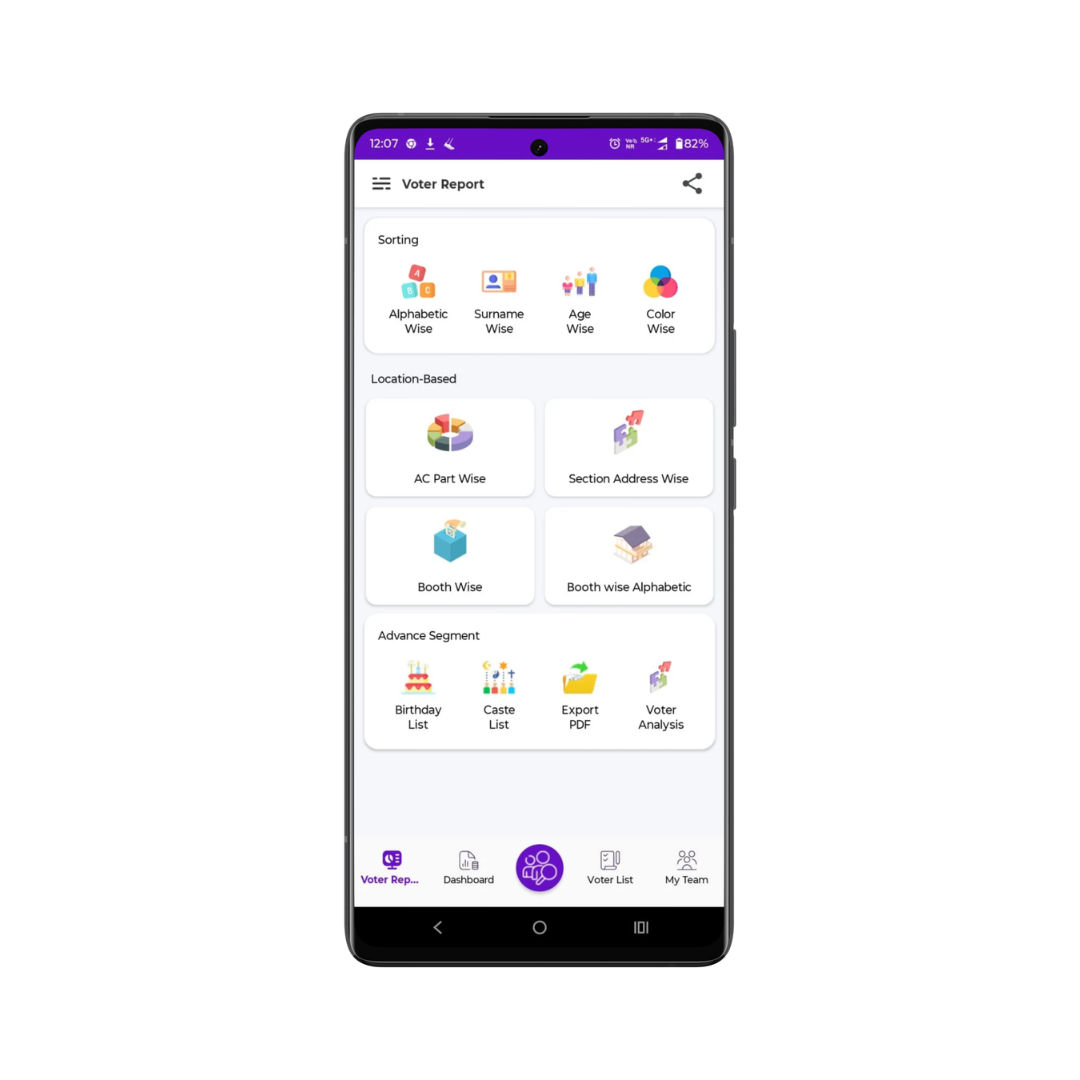
Generate detailed analytical reports with Korum App,
the smart Election Management App designed for data-driven campaigns. Analyse
voters by gender, category, age group, and support type to identify strengths,
gaps, and winning opportunities. Access booth-wise summaries, track trends, and
export reports instantly for faster, strategic decision-making.
View voters segmented
by gender, support type, category, or age group.
Identify strong
supporters, doubtful voters, and opposition clusters clearly.
Get quick booth-wise or area-wise summaries with trend insights.
Export detailed Excel
reports instantly for analysis or team sharing.
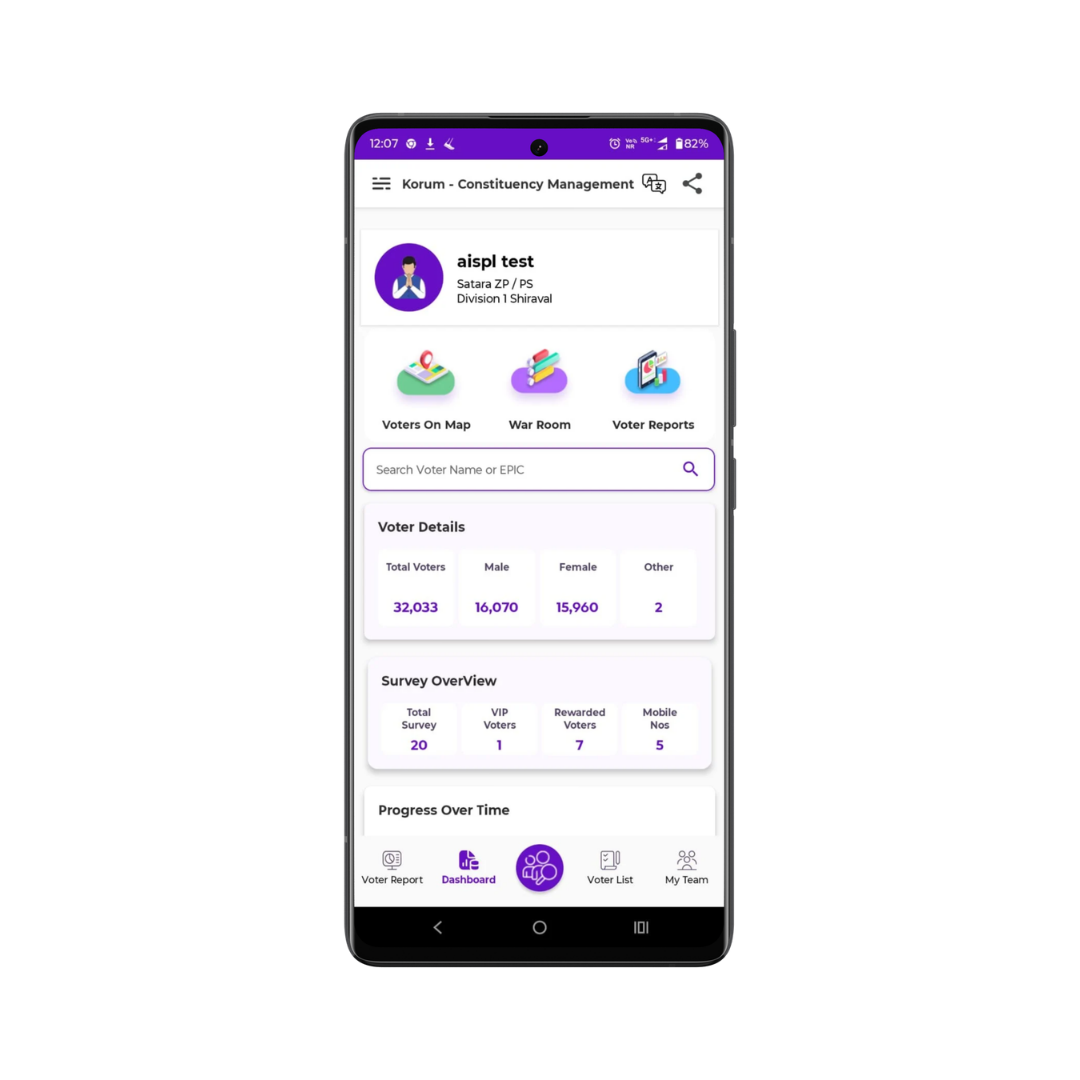
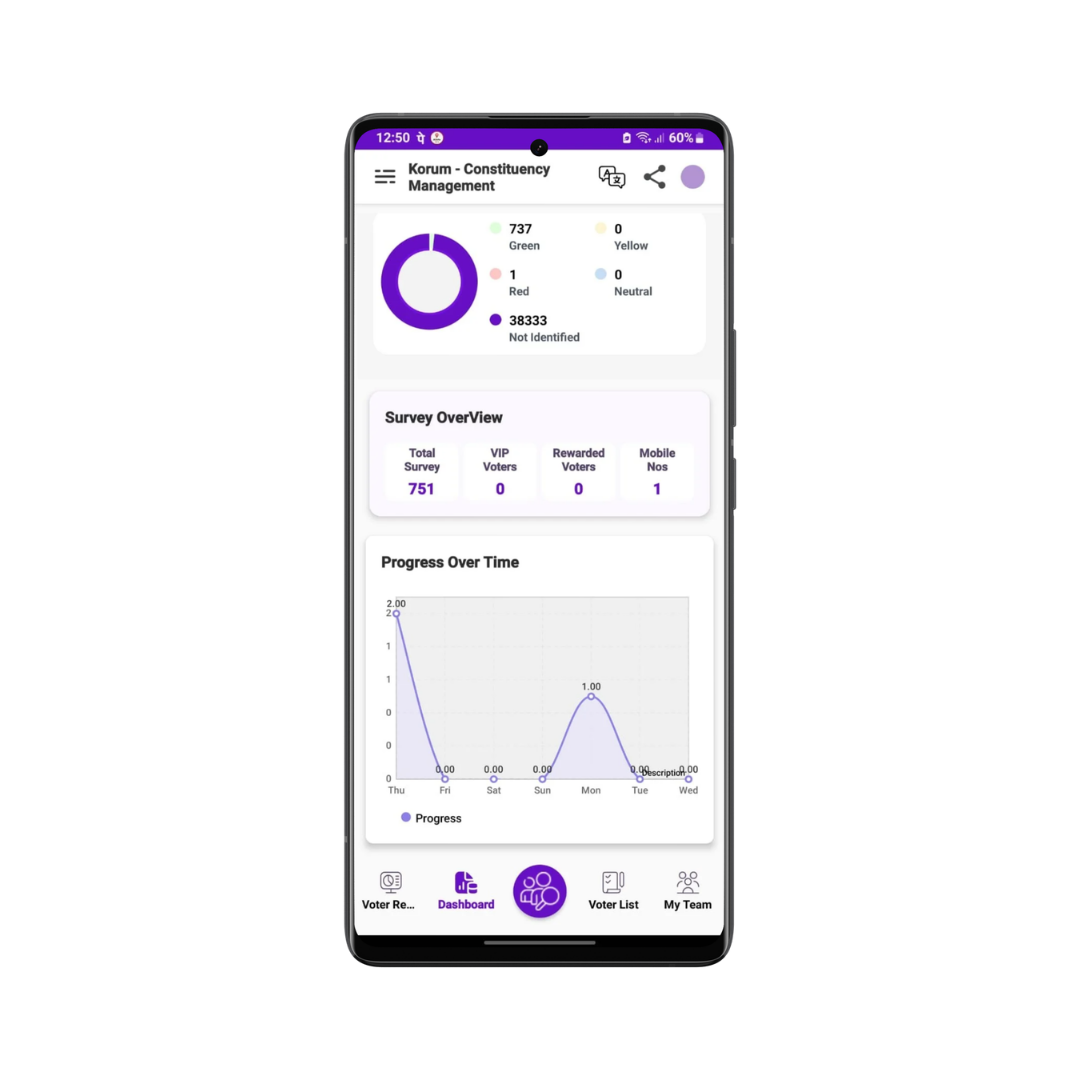
Get a complete overview of your campaign on a
single screen with Korum App, India’s advanced Election Management App. View
total voters segmented by gender, support type, and booth strength to measure
actual campaign performance. Compare area-wise progress, track growth patterns,
and make fast, data-driven decisions to improve election outcomes.
See total voters
clearly segmented by gender and support type.
Review booth-wise or ward-wise voter strength
instantly.
Compare
performance and supporter growth between different areas.
Make quick, data-driven campaign decisions with real-time insights.
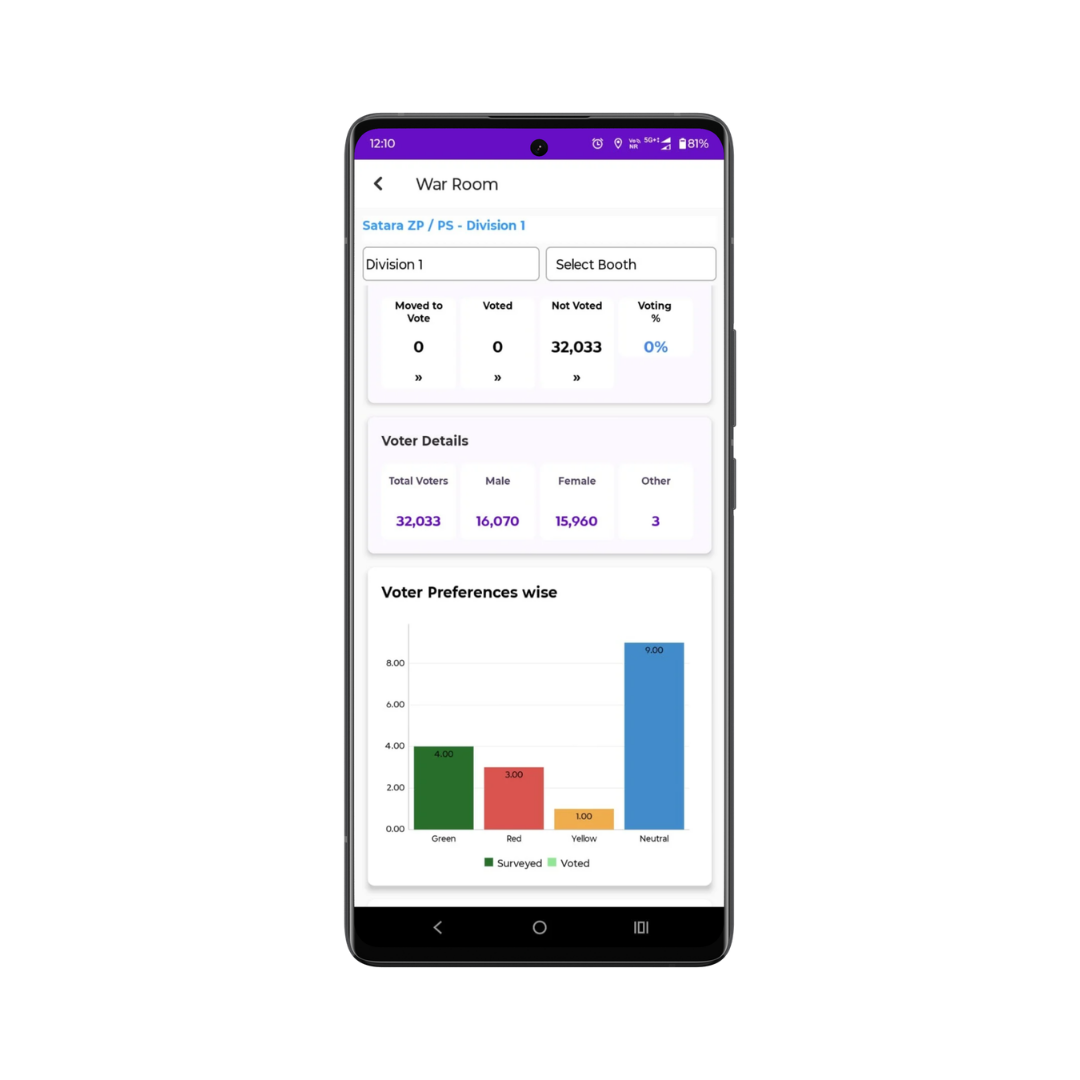
The War Room delivers a complete booth-wise voting
summary in real time from one centralised control centre. Monitor live voting
progress, track how many supporters have voted or are still pending, and receive
instant updates from ground workers. Make fast, data-driven decisions during
polling hours and efficiently manage supporter rewards with full
transparency.
Track in real time how many supporters have voted versus those remaining.
Get accurate
booth-wise voting estimates for targeted supporters.
Easily manage, record, and monitor rewards distributed to supporters.
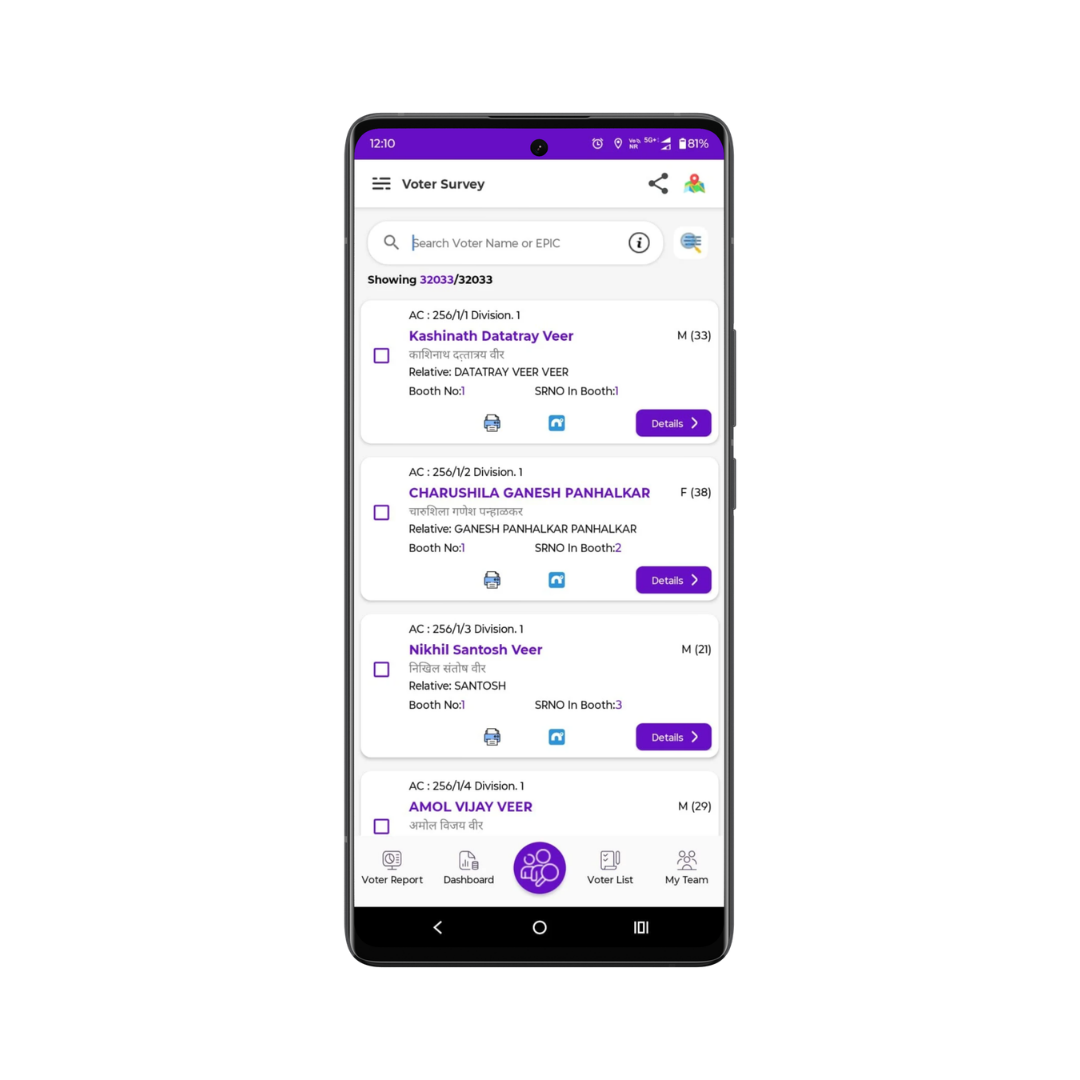
Finding voters is faster and smarter with Korum’s
centralised and advanced voter search system. Search and access complete voter
details across the entire ward within seconds using name, surname, EPIC number,
or mobile number. Connect instantly through built-in call, WhatsApp, and
messaging tools, and share voter information or campaign updates seamlessly
without switching apps.
Call,
WhatsApp, or send voter details via text
directly from the app.
Share booth
slips along with your campaign
banner instantly.
Communicate and coordinate without switching between multiple apps.
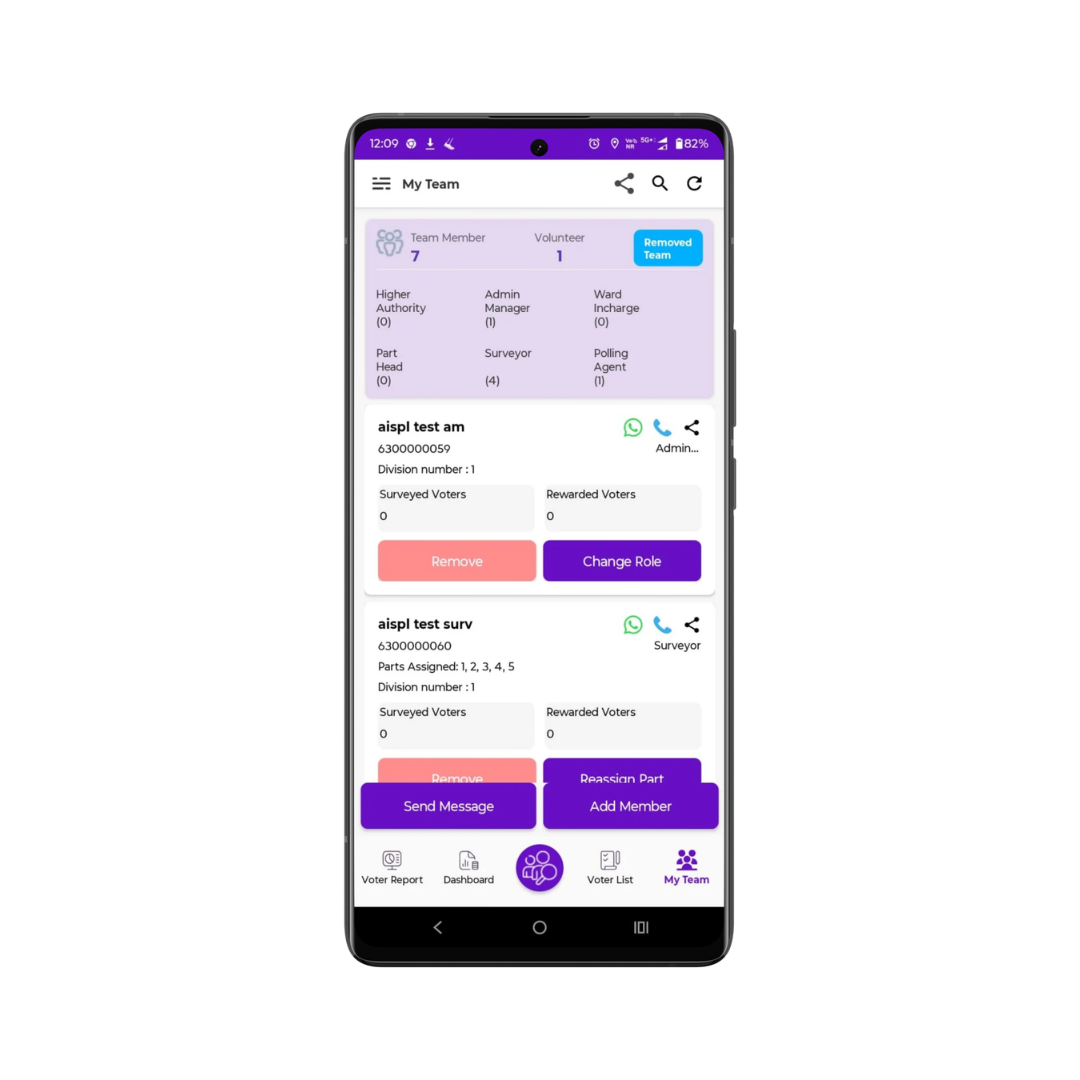
Manage your campaign team effortlessly with complete
visibility and centralised control. Track the entire team hierarchy in real time
from a single platform, from candidate level to booth worker. Stay connected
with every member, assign roles clearly, and monitor responsibilities to improve
coordination, accountability, and smooth execution across your
campaign.
View
the complete team hierarchy under every role directly at the candidate
level.
Call or
WhatsApp any added team member instantly from within the app.
Strengthen coordination and execution with centralised team management and
role-based access
With the Voter Slip Share feature, generate and
share booth-wise voter slips instantly in an organised PDF format. Each PDF
includes a structured official header with ward name, booth number, booth name,
polling date, and election details. Create separate PDFs for each booth to
manage voter information efficiently and ensure smooth coordination at the booth
level on polling day.
Booth-wise Voter Slip Generation:
Create a separate PDF for each booth containing complete voter details of that
booth in a single, well-organised document.
PDF with Official Header:
Each PDF displays ward name, booth number, booth name, polling date, and
Assembly/Municipal information in a clear header format, making the slip more
professional and easy to read.

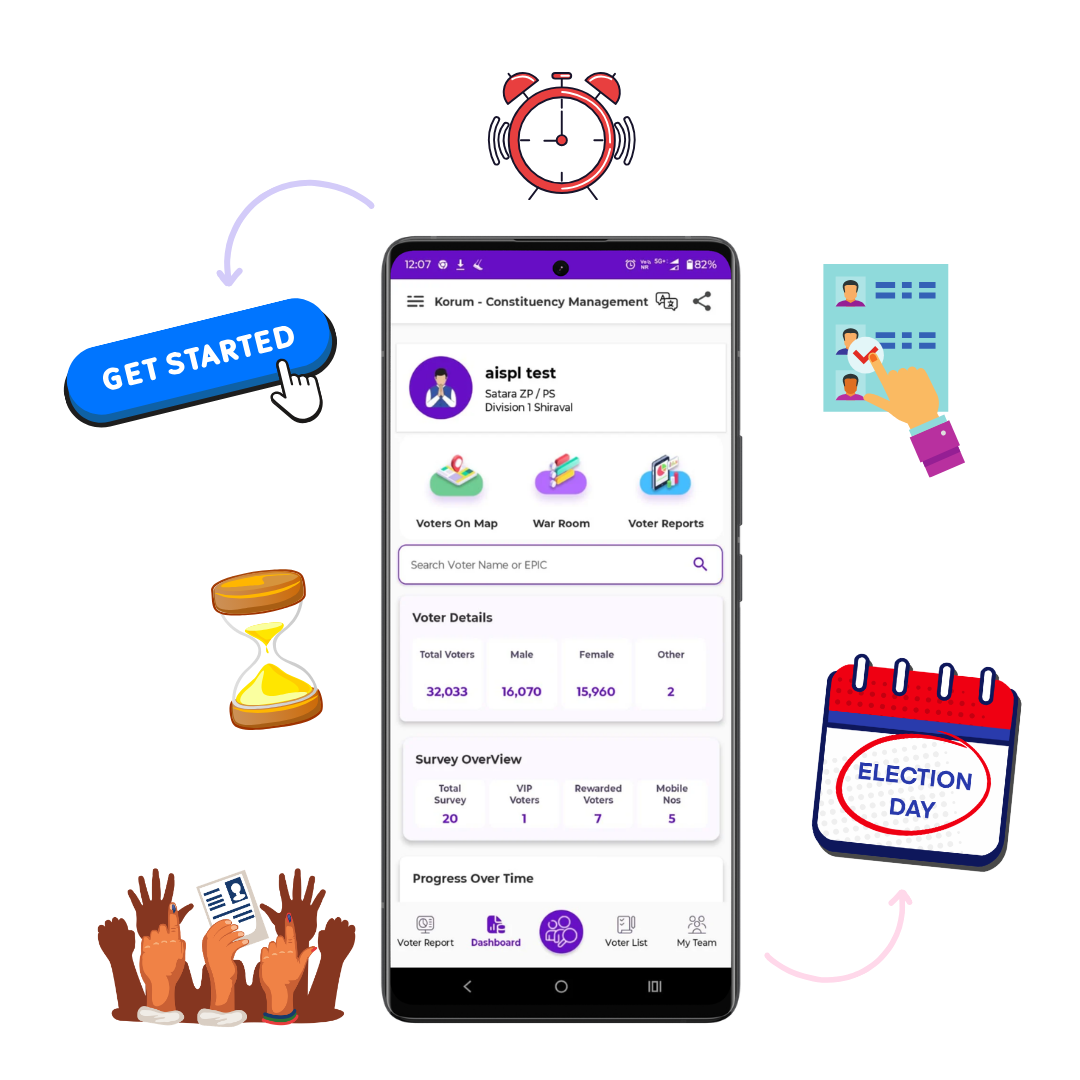
Manage
your constituency in real time with Korum, the trusted all-in-one Election
Management App.
Plan smarter, track booth performance, analyse reports, and execute your campaign
with data-driven precision.
Download Now
Korum is a powerful and secure voter management solution designed to help political teams manage constituencies with precision. From voter analysis and booth tracking to polling day monitoring and team coordination, Korum simplifies complex campaign operations and transforms them into structured, data-driven actions. With real-time insights, advanced analytics, AI-powered features, and strong data protection, Korum enables leaders to focus on strategy while the system handles execution efficiency.
Download NowWe believe in open communication and honest operations. Transparency is the foundation of Korum.
Our dedicated support team is always ready to help you. We ensure a seamless experience.
Your data security is our top priority. We use advanced encryption protocols to protect your information.
Navigate easily with a clean, intuitive interface that helps you manage your tasks quickly.
Empower your campaign with real-time insights, transparent operations, and advanced secure voter management, all in one powerful Election Management App. Save valuable time, streamline coordination, improve booth-level execution, and lead your team confidently with intelligent, data-driven tools built for winning campaigns.
Download Now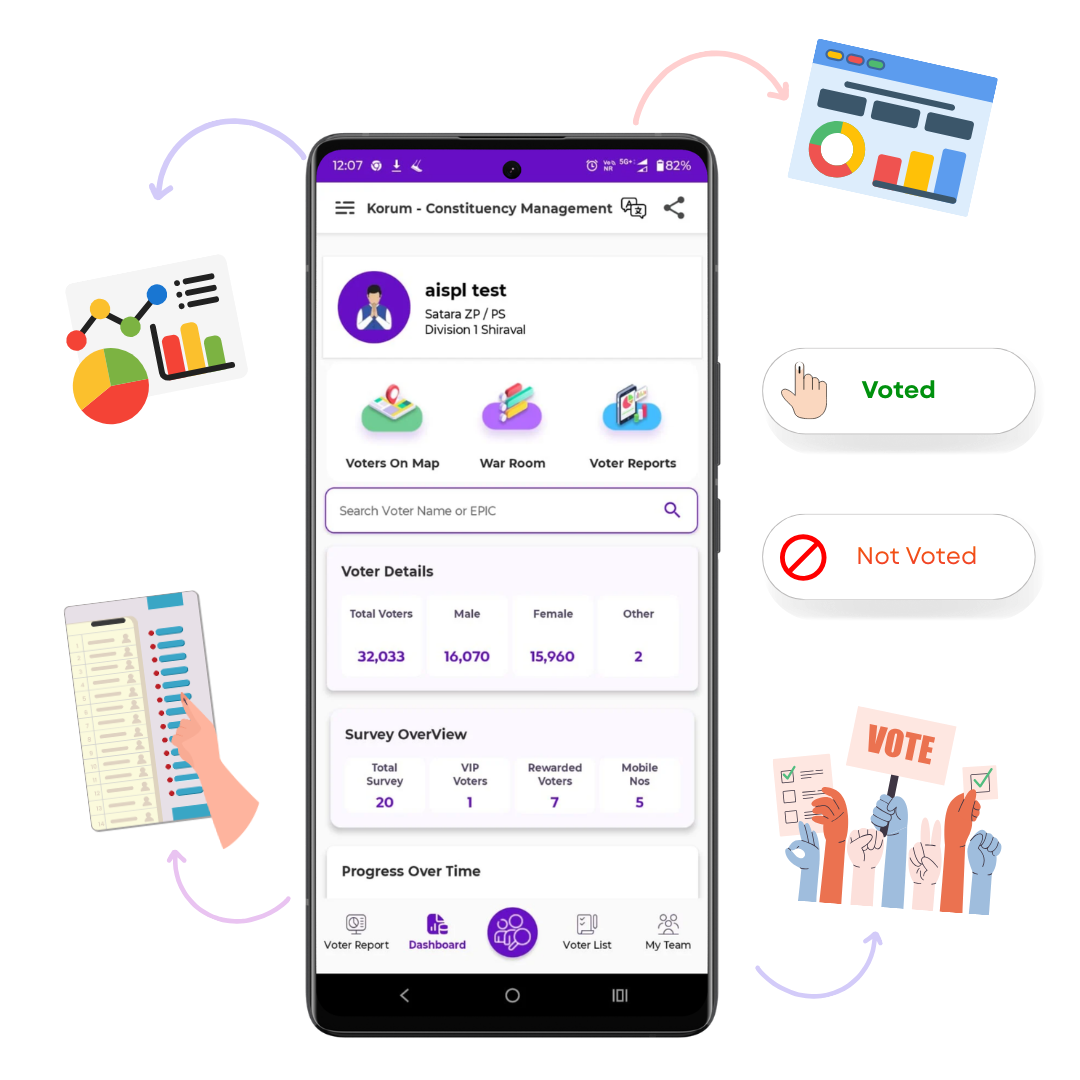
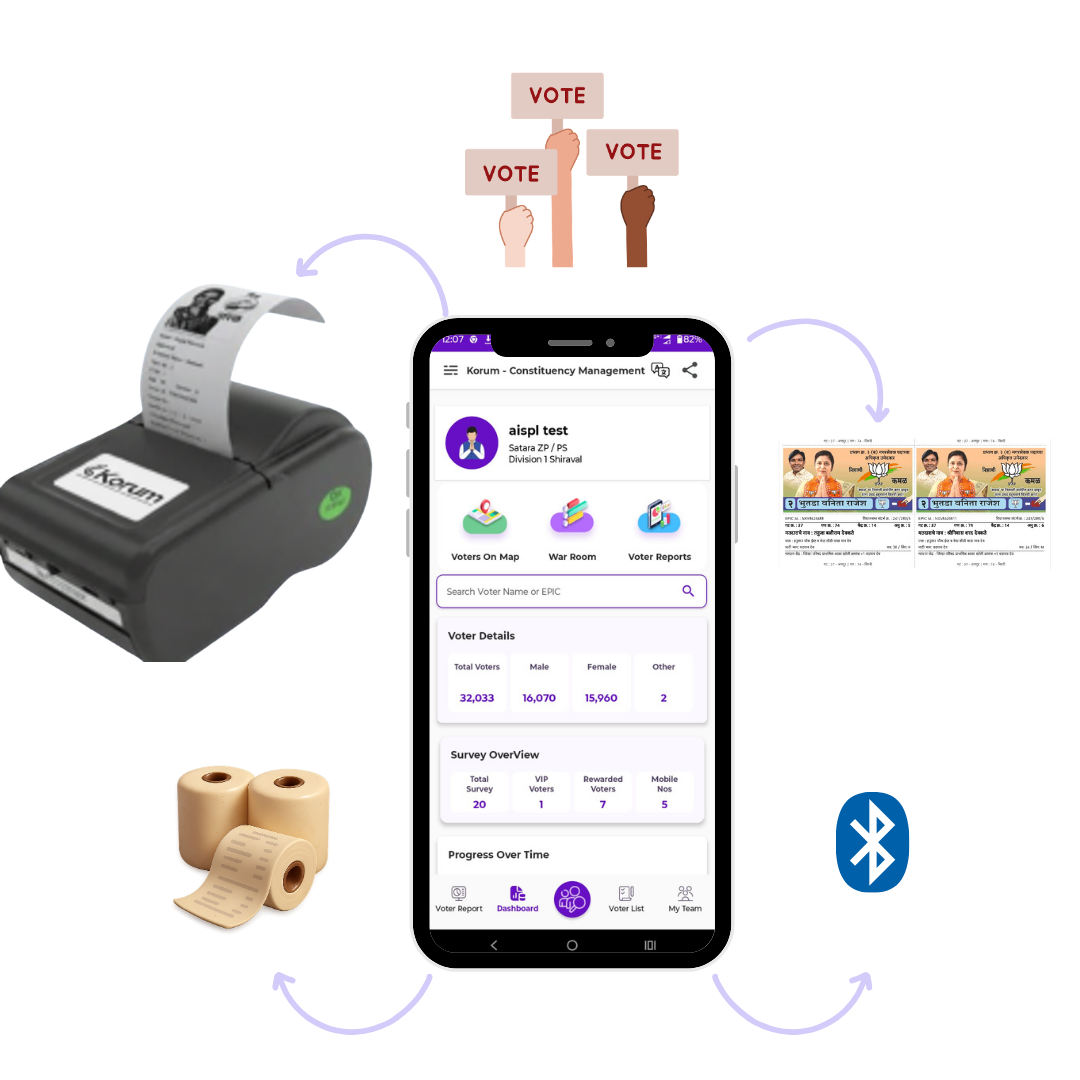
Print booth-wise voter slips instantly
by connecting a Bluetooth printer directly to the Korum App. Generate slips with
your candidate name, election symbol, and complete voter details within seconds.
Save time, reduce manual effort, and streamline last-minute booth management with
fast and reliable slip printing.
Wireless instant slip printing
Booth-wise structured
voter slips
Fast and
efficient polling-day support
Download
Now
Explore more products designed with the same quality and care.


While the printed booklet was limited to a few thousand copies, a digital Kambi story can get 100,000 views in a week. This led to:
In the lush, rain-soaked landscapes of Kerala, where literacy rates soar and bookshops line every major street, there exists a literary category that is rarely spoken of in polite company but is universally recognized. It is not found on the bestselling shelves of DC Books or Mathrubhumi. It is not reviewed in Malayala Manorama or discussed on Asianet book clubs. Instead, it is passed from hand to sweaty hand, hidden under mattresses, downloaded via Bluetooth in college hostels, and printed on cheap, yellowing paper.
This is the world of the Kambi Kochupusthakam.
Translated directly, Kambi means "erotic" or "sensational," Kochu means "small," and Pusthakam means "book." Together, the term refers to the underground (and sometimes online) ecosystem of short, erotic, often explicit pulp fiction written in the Malayalam language. For decades, the "Kambi Kochupusthakam" has been the guilty pleasure of millions of Malayalis, from bored housewives to rowdy college students, from Gulf returnees to lorry drivers.
But what is the real story behind these sleazy little booklets? Are they simply pornography in print, or do they represent a suppressed voice in the conservative moral fabric of Kerala society? This article dives deep into the history, cultural impact, and modern-day digital evolution of the legendary Kambi Kochupusthakam.
The kambi kochupusthakam is not great literature in the traditional sense. It is often formulaic, morally simplistic, and graphically problematic. But as a cultural document, it is invaluable. It tells us how ordinary Malayalis navigated the treacherous waters of desire within a society that offered no maps.
To hold a Kambi Kochupusthakam is to hold a secret. And secrets, as Kerala knows well, are the true underground rivers of any civilization.
Disclaimer: This article is for academic and cultural analysis purposes. The author does not endorse the distribution of obscene material and respects all applicable laws.
Kambi Kochupusthakam (literally "Little Bronze Books" or "Small Metal Books") is a long-standing term in Kerala's literary culture, historically referring to pocket-sized collections of adult-oriented short stories in Malayalam. Cultural Context and Origins
: The term "Kambi" is a colloquialism in Malayalam that originally meant "wire" or "metal," but evolved in a slang context to refer to content that is "bold" or "steamy". "Kochupusthakam" simply translates to "small book". Evolution from Print to Digital
: These stories began as physically small, cheaply printed booklets sold at roadside stalls and bus stands. With the rise of the internet, the medium shifted to PDFs and dedicated blogs, making it a prominent part of Malayalam digital subculture. Key Characteristics Narrative Style
: While primarily focused on adult themes, the writing often mimics traditional storytelling structures. It frequently explores the complexities of human relationships, social dynamics, and taboos within the conservative backdrop of Kerala.
: These stories are written in vernacular Malayalam, often using regional dialects to add a sense of realism or local flavor. Pseudonymity
: Most authors use pen names, and the content is typically self-published or shared on community-driven forums rather than through mainstream publishing houses. Current Status
In the modern era, "Kambi Kochupusthakam" has largely transitioned into a broader category of digital "Kambikathakal" (bold stories). While mainstream literary platforms like
focus on general creative fiction, the "Kambi" subgenre remains a niche part of the internet landscape, often discussed in terms of its role in Kerala's underground pop culture. If you'd like, I can: Clarify the of specific Malayalam terms used in this genre Discuss how digital platforms have changed underground literature in Kerala Explain the legal or social guidelines surrounding such content in India Kochupusthakam Kambikathakal 2017 Idavela Latest
These stories are widely circulated online through PDF downloads and dedicated forums, often focusing on themes of relationships and domestic life. How to Access Content
If you are looking for "full papers" (complete stories or full PDFs), they are typically found on the following types of platforms: Document Sharing Sites : Platforms like
host various user-uploaded Malayalam "Kathakal" (stories) and "Kochupusthakam" archives. Dedicated Communities : Sites such as kambikathakal.net are primary hubs for this audience. Discussion Forums
: Online groups often share digital copies of "Kochupusthakam" and discuss specific story arcs or series. kambi kochupusthakam
Much of this content is intended for adult audiences (18+). It is important to ensure you are accessing reputable sites to avoid malware often associated with unofficial PDF download links.
Given the nature of these publications, readers should be aware that many of these online repositories contain unmoderated, user-generated content. When searching for digital files, it is advisable to prioritize platforms that adhere to legal standards and content safety guidelines to ensure the material is both legal and safe for your device. Kambi Kathakal - Nirmala Devi | PDF | Lifestyle - Scribd
The word Kochupusthakam literally translates to "small book." Originally, these were cheaply printed booklets sold at bus stands, railway stations, and small newsstands. Due to their explicit nature, they were often sold discreetly. They gained notoriety for their simple, colloquial Malayalam and themes that were considered taboo in mainstream society. 2. The Digital Transition
With the advent of the internet, the physical booklets were largely replaced by digital platforms.
Websites and Blogs: Dedicated portals like New Kambikadha emerged, hosting thousands of stories in PDF and text formats.
Social Media and Apps: Messaging apps like Telegram and WhatsApp became the primary channels for distributing this content through dedicated groups and "channels."
Multimedia Evolution: Modern versions often include "Kambi Audio Stories," where narrators read the stories aloud, catering to a wider audience through platforms like YouTube and specialized mobile apps. 3. Cultural Context and Impact
Linguistic Style: The stories are known for using "Pacha Malayalam" (raw/pure Malayalam), which includes slang and regional dialects often absent from formal literature.
Social Taboos: While controversial and frequently criticized for promoting unrealistic or problematic scenarios, supporters often view them as a safe outlet for sexual expression in a traditionally conservative society.
Legal Status: Because the content is often sexually explicit, it frequently skirts or violates Indian obscenity laws (Section 292 of the IPC), leading to periodic crackdowns on hosting websites and distributors. 4. Common Themes
The stories typically revolve around domestic settings, office environments, or neighborhood encounters. They are often serialized, keeping readers engaged over multiple "episodes" or chapters, similar to traditional pulp fiction.
Kambi Kochupusthakam is a term that holds a unique place in the cultural and digital landscape of Kerala. While its roots are humble—originating as small, cheaply printed physical booklets—it has evolved into a massive digital phenomenon that reflects the intersection of language, clandestine literature, and the internet age in South India. The Origins: From Physical Booklets to Digital Files
The word Kochupusthakam literally translates to "small book" in Malayalam. Historically, these were pocket-sized pulp fiction novelettes sold at roadside newsstands, railway stations, and bus stands across Kerala. Often printed on low-quality paper with sensationalist covers, they were the Malayalam equivalent of "yellow journalism" or "dime novels."
The term Kambi (which literally means "wire" or "rod" but serves as slang for erotic or provocative content) was eventually prefixed to differentiate these specific adult-themed stories from general pulp fiction. For decades, reading a Kambi Kochupusthakam was a taboo act, done in private or shared secretly among friends. The Digital Revolution and the "Mallu" Internet
With the advent of the internet and the proliferation of smartphones in Kerala, the medium shifted. The physical booklets largely disappeared, replaced by PDFs and dedicated websites.
Online Forums and Blogs: In the early 2000s, platforms like Blogspot and various Malayalam forums became the new home for these stories. Enthusiasts began digitizing old print copies and writing new original content.
PDF Culture: The "Kambi PDF" became a standard file format for distribution. These files were easily shared via Bluetooth in the pre-4G era and later through messaging apps like WhatsApp and Telegram.
Community-Driven Writing: Unlike the old days where anonymous publishers hired ghostwriters, the digital era turned readers into writers. This led to a more conversational and localized style of storytelling that resonated with the contemporary Malayali youth. The Role of Language and Literacy
Kerala boasts the highest literacy rate in India, and this reflects even in its underground literature. Kambi Kochupusthakam is unique because it is written in a highly descriptive, vernacular Malayalam. For many, these stories were an unofficial way of engaging with the language outside of formal textbooks or classical literature. While the printed booklet was limited to a
The stories often use specific regional dialects—from the slang of Kochi to the formal tones of Valluvanad—making the content feel deeply rooted in the local culture, despite its controversial nature. The "Ammavan" and "Kambi" Memes
In recent years, the concept of Kambi Kochupusthakam has entered the mainstream through social media memes. The "Mallu" meme culture often references these stories to poke fun at moral policing or the generational gap. The trope of the "creepy uncle" (Ammavan) or the secret reader has become a staple of Malayalam comedy on platforms like Instagram and Reddit. Social and Legal Implications
Despite its popularity, the distribution of Kambi content remains a legal gray area in India. Under Section 292 of the Indian Penal Code, the sale or distribution of "obscene" material is prohibited. This has led to frequent "cat-and-mouse" games between website admins and cyber-cell authorities.
Furthermore, the genre has faced criticism for often portraying regressive themes or unrealistic expectations. However, proponents argue that in a conservative society, such literature provides a private outlet for exploring human psychology and desire that is otherwise silenced in public discourse. Conclusion
The journey of the Kambi Kochupusthakam from a dusty railway stall to a high-traffic digital portal is a fascinating study of Kerala’s subculture. It represents more than just adult fiction; it is a testament to how technology can preserve and transform even the most taboo elements of a society’s literature. As long as there is a demand for localized, vernacular storytelling, the "small book" will continue to find a way to reach its audience, whether in print or pixels. AI responses may include mistakes. Learn more
The Cultural Legacy of "Kambi Kochupusthakam" in the Digital Age
The term Kambi Kochupusthakam (literally translated from Malayalam as "Small Wire/Iron Books") occupies a unique, often controversial, yet undeniable space in the cultural history of Kerala. Long before the era of high-speed internet and smartphones, these pocket-sized pamphlets were the primary medium for adult-oriented storytelling in the region.
Today, while the physical format has largely vanished, the legacy of "Kambi" stories continues to evolve in the digital landscape. Let’s dive into the history, the transition, and the modern-day context of this cultural phenomenon. 1. The Era of the Pocket Book
For decades, Kochupusthakams were a staple of the underground literary scene in Kerala. These were small, cheaply printed booklets, often sold discreetly at local newsstands, bus stands, or passed between friends. The Format: Typically 16 to 32 pages.
The Content: Explicit adult narratives, often written under pseudonyms.
The Distribution: A "gray market" economy that relied on word-of-mouth and discreet transactions. 2. The Digital Shift: From Paper to PDF
With the advent of the internet in the late 90s and early 2000s, the "Kambi" culture didn't disappear—it migrated. The transition was fueled by the anonymity the internet provided.
Forums and Blogs: Early platforms like Orkut and dedicated Malayalam blogs became hubs for amateur writers to share serialized stories.
The PDF Revolution: The physical booklet was replaced by the digital PDF. This allowed for easier sharing and archival, leading to the creation of massive online repositories.
Social Media: Today, platforms like Telegram and Facebook groups have become the primary modern distributors, moving away from centralized websites to decentralized messaging apps. 3. Literary Style and Themes
While often dismissed as purely sensational, many "Kambi" stories followed specific narrative structures. They frequently explored:
Rural vs. Urban settings: Many stories were set in the traditional Kerala countryside, playing on the contrast between conservative social norms and private desires.
Forbidden Narratives: Much of the appeal lay in the "forbidden" nature of the topics, reflecting a societal pushback against strict cultural taboos.
Colloquial Language: Unlike formal Malayalam literature, these stories used raw, everyday language, making them accessible to a wide audience. 4. Societal Impact and Legal Context Disclaimer: This article is for academic and cultural
The "Kambi" phenomenon has always walked a thin line regarding legal and social acceptance.
Censorship: Over the years, many websites and physical publishers faced legal action under various obscenity laws.
Taboo vs. Reality: In Kerala's highly literate society, "Kambi" stories were an open secret—publicly frowned upon but privately consumed by a massive demographic. 5. The Future of Malayalam Adult Fiction
In the current era of ubiquitous adult content on the web, the specific niche of the Kambi Kochupusthakam is changing.
Visual Media: The rise of short films and web series has shifted the audience's attention from text-based stories to visual content.
Audio Stories: There is a growing trend of "Kambi" stories being adapted into audio formats or podcasts, catering to a new generation of listeners. Conclusion
"Kambi Kochupusthakam" is more than just a collection of adult stories; it is a reflection of a society's navigation through desire, privacy, and technology. From the discreet paper booklets of the 80s to the encrypted Telegram channels of 2024, it remains a fascinating study of how subcultures adapt and survive.
Are you interested in the history of Malayalam literature or how digital media is changing regional subcultures? Let me know if you'd like to:
Explore the evolution of Malayalam blogging in the early 2000s. Discuss the legal history of adult publications in India.
Analyze the impact of technology on traditional publishing in Kerala.
Kambi is a 28‑year‑old “semi‑unemployed” graduate who runs a modest tea stall at the village’s central junction. His daily routine is punctuated by:
When the state government announces a tourism‑development project that threatens to raze Kambi’s beloved “Mullaikulangara” pond, the villagers split into two camps: those who see a lucrative future and those who mourn the loss of a cultural anchor. Kambi, armed with his notebook, becomes the unlikely chronicler of the debate, using humor and satire to expose the absurdities on both sides.
Parallel to the main conflict, we follow sub‑plots such as:
The narrative builds to a village-wide “Mullaikulangara Festival”, where Kambi’s notebook is read aloud, forcing everyone to confront the collective memory they’ve been ignoring.
With the arrival of affordable smartphones and 4G internet (especially after Jio’s launch in 2016), the physical Kambi Kochupusthakam has nearly vanished. The last remaining publishers in Kozhikode’s Mittai Theruvu and Ernakulam’s Marine Drive report that print runs have dropped from 10,000 copies to barely 500.
But the genre has not died—it has metastasized online.
Today, the search for "kambi kochupusthakam" leads to:
The content has also evolved. Modern digital Kambi includes LGBTQ+ themes, office romances, and even sci-fi erotica—topics the old kochupusthakam would never touch. However, the aesthetic remains: the same metaphors, the same serialized cliffhangers, and the same anonymous authors.
Who reads this stuff? The stereotype is the "teenage boy in a rural hostel," but the data (such as it exists) suggests a more diverse audience:
The latest evolution is "Kambi Audiobooks." On YouTube and Telegram channels, men with deep baritones (or women with synthesized voices) read these stories aloud, set to generic lounge music. The "Kambi Kochupusthakam" has become a transmedia phenomenon.
Between 2010 and 2020, hundreds of Malayalam blogs sprung up. Names like "Mallu Kambi," "Kerala Sex Story Blogspot," and "Vayalar Kambi Vartha" became viral sensations. The format changed from book to blog post. Writers now wrote in the comment sections, often anonymously. Stories became shorter, more extreme, and hyper-specific.
We're here to help. Reach out to us through any of these channels.
Stay connected with us on social media
Visit us at our location
Get the Korum app on your Android device
Download App Download DesktopCompatible with Android 5.0 and above