|
CAD for leather goods and small leather goods |  |
 |
 |
|
CAD for leather goods and small leather goods | |
|
|
| Mozart | Liszt | Virtual-Design | Support | Contacts |
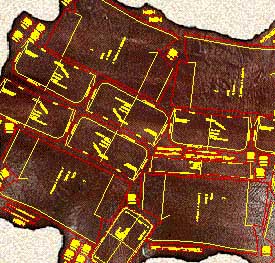
| Mozart is a CAD realized following the requests and
suggestions of leather goods pattern-makers to simplify and expand their work being
them free to design according to their ideas. Mozart requires AutoCAD® or ZWCAD®. The license of Mozart does not include the license of AutoCAD® or ZWCAD® Mozart 8 is available for AutoCAD® up to version 2026 and for ZWCAD® up to version 2025. |
|
Quick learning Built on pattern-makers' requirements Mozart shares his working method giving full liberty to design the model. The pattern-maker can concentrate himself on the model to be realized. He does not have to code the materials or pieces before or during the drawing. Freely customizable The user can easily change many settings of Mozart: colors, the method of calculating the bill of materials and the bill of working times and many other parameters. Mozart can also load and use custom toolbars, scripts and commands written by the user. |
|
|
Flexibility The user is free to choose the names of the patterns and their hierarchy. Each pattern is a single file and Brands, Lines, Seasons etc. can be organized by folders. Each pattern is independent from the others and can be copied or moved in whole or in part from one folder to another like any other file. The bill of materials and the bill of working times can be performed in different ways and the reports are produced as ASCII text or Excel document. |
|
Data exchange The patterns can be read using many others CAD programs. The cutting can be done using a wide range of machines from vertical or flatbed plotters to knife, laser or water-jet cutting machines. The bill of materials, the bill of accessories and the bill of working times can be exported to others data management systems. Development The open structure of Mozart means it can be constantly improved according to users suggestions and requests. The upgrade of Mozart does not oblige the user to upgrade the other components of the CAD system. Plug-ins increase the power and the flexibility of Mozart. |
|
| Plug-ins add specific functions to Mozart. The user himself can write his own plug-ins, Mozart will automatically load them. Plug-ins allow to customize Mozart's installations to the needs of the user and reduce the cost because they avoid the purchase of what is not needed. Users can request the development of personal plug-ins to create special reports or drawing functions. On request personal plug-ins are not available to other users in order to protect their confidentiality. |
You might find a scanned, grainy PDF on a file-sharing site or a torrent tracker. Before you click "download," consider the consequences:
You will find many links across Reddit, archive.org, and various file-sharing forums offering a free PDF. Some are incomplete scans missing pages (often the index or the chord chart appendix). Others are low-resolution copies that make the musical examples blurry.
A word of practical advice: While the PDF is convenient for a quick search on your tablet, this book is a reference manual. Most serious students find the physical, spiral-bound copy far more useful because you can prop it open on your music stand while both hands are on the keys. Flipping between PDF pages on a small screen while practicing is frustrating. mark levine the jazz piano bookpdf
The PDF is also technically a copyrighted work (Sher Music Co.). Levine passed away in 2022, but his estate and publisher still rely on sales.
This is where the book separates itself. Levine dives into: You might find a scanned, grainy PDF on
Before we dissect the book, we need to understand the author. Mark Levine (1938–2022) wasn't just a theorist; he was a first-call jazz pianist who played with the giants. We are talking about Woody Shaw, Joe Henderson, Stan Getz, and Blue Note legends.
Unlike many academic writers who never left the conservatory, Levine learned jazz in the trenches of the 1960s and 70s San Francisco scene. He knew that jazz theory isn't math—it's a spoken language. His books (including the equally famous The Jazz Theory Book) are unique because they are written from the perspective of a working musician, not a professor. Scanned PDFs are usually unsearchable, have crooked pages,
When Levine wrote The Jazz Piano Book (published in 1989 by Sher Music), he solved a massive problem: there was no comprehensive, non-classical piano method focused solely on voicings, improvisation, and the specific mechanics of jazz.
Scanned PDFs are usually unsearchable, have crooked pages, and—most critically—the musical examples are unreadable. Jazz piano voicings are visual. If a chord has five notes and the scan is blurry, you will learn the wrong notes. You can't "CTRL+F" a B-flat7(#11) in a bad scan.
Don't try to learn everything at once. Start with the concept of Rootless Voicings. This is the single most important takeaway for beginners.
The infamous "bebop scale" (adding a chromatic passing tone to a 7-note scale) is explained clearly. Levine gives you fingerings and practice patterns that actually sound like Charlie Parker.
All product names, brand names or trademarks named here belong to their respective holders. |