DDR Professional recovery software provides interactive result to rescue lost files and folders from different type of storage devices including hard drive, memory card, digital camera, smart drive, flash drive, key chain drive and other USB portable media devices. Data Recovery Software rescue virus corrupted and inaccessible video-audio files, music files, memorable pictures, snaps and other similar files from HDD drive storage media and USB removable media.
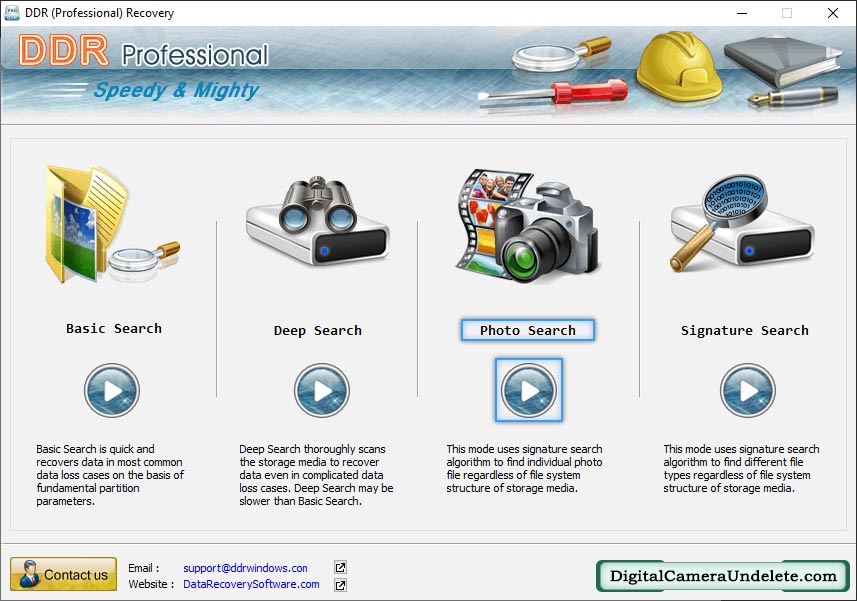
Choose any of the searching criteria to restore lost data. Here we are going to select 'Photo Search' mode for demonstration purpose.
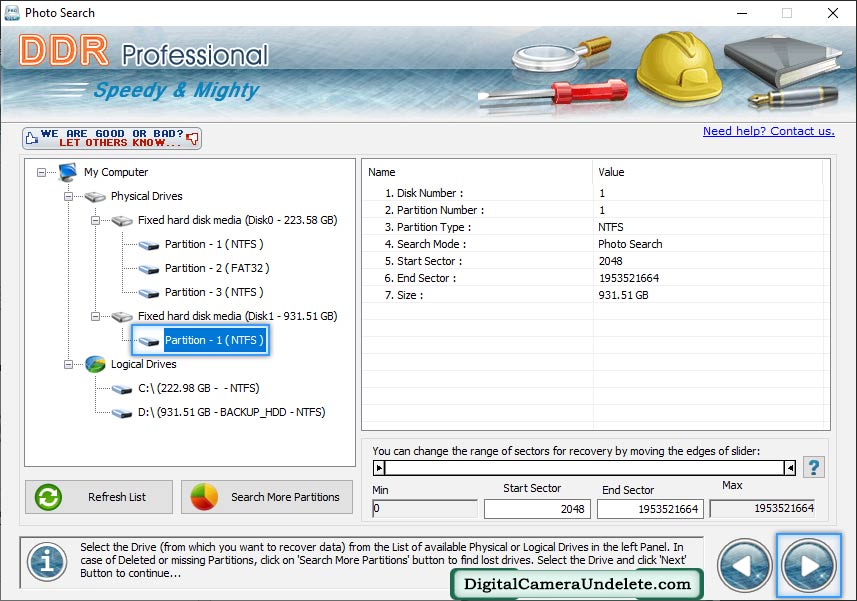
Select disk partition or drive from which you want to recover data. In case of deleted or missing partitions, click on 'Search More Partitions' button.
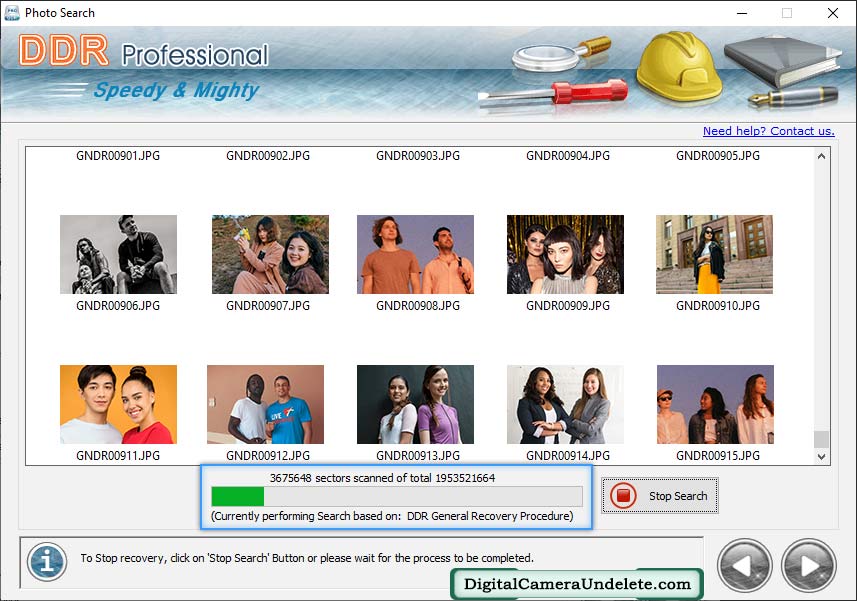
Currently performing scanning process, You can stop searching process by clicking on "Stop" button.
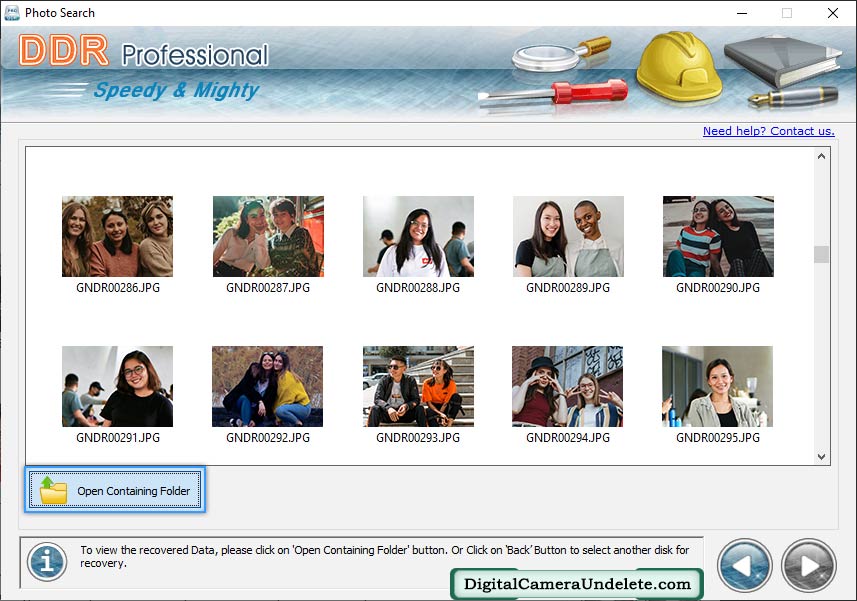
Data has been recovered successfully. To view your recovered data, click on 'Open Containing Folder' button.
Mixing Fun with Learning: Making Ice Cream! 🍦✨ Our Primary 4 students recently had a "cool" breakthrough in their English lessons! As part of our STELLAR (Strategies for English Language Learning and Reading) curriculum, the P4 classes dived into the instructional text, "Making Ice Cream Without a Freezer." But why just read about it when you can taste it? From Text to Treat
To bring their learning to life, our students participated in a hands-on experiential learning activity. This wasn't just about dessert; it was a clever way to master procedural writing and sequencing skills. By following the steps in their STELLAR readers, students learned exactly how to turn simple ingredients into a frozen delight using only ice and salt. The Science of the "Chill"
The highlight of the day was seeing the students' faces light up as they realized they didn't need a freezer. They learned that adding salt to ice lowers the freezing point, making the mixture cold enough to freeze their cream and sugar in minutes. What our P4 Chefs used: Whipping cream and sugar Vanilla essence for that classic flavor Plenty of ice and rock salt Toppings like chocolate chips and crushed Oreos Teamwork Makes the Cream Work
Beyond the English curriculum, this activity was a fantastic exercise in teamwork and patience. Students worked in groups, shaking their bags with high energy and encouraging one another until the liquid transformed into solid ice cream.
The result? A sweet reward that proved learning is always better with a tasty twist! 😋
Ever wondered if a high-performance e-reader could handle the heat—or in this case, the cold—of a busy kitchen? Today, we are putting the Stellar Reader P4 to the ultimate stress test. We aren’t just reading about dessert; we are making it.
Here is how the P4 performed while whipping up a batch of homemade Salted Caramel Crunch ice cream. The Setup: Durability Meets Dairy
Most people treat their e-readers like fragile glass. The P4, however, is built with an IPX8 waterproof rating and a ruggedized frame.
The Goal: Follow a complex, multi-step recipe without getting "screen anxiety."
The Reality: Flour, cream, and sticky sugar were everywhere.
The P4 Advantage: Because the screen is flush and sealed, a quick damp wipe-down at the end of the night cleared off every stray splatter. Hands-Free Reading: The P4’s Secret Weapon
One of the biggest hurdles in "kitchen reading" is messy hands. You can't swipe a page when your fingers are covered in egg yolks. The Auto-Scroll Feature
I set the P4 to its "Slow Scroll" mode. As I tempered the custard, the text moved at my pace. I didn't have to touch the device once while the milk was simmering. The Bluetooth Pedal Compatibility
For those who want total control, I paired the P4 with a small Bluetooth page-turner pedal on the floor. A quick tap of my toe, and I was onto the "Chilling" phase of the instructions. Lighting the Way
Kitchen lighting is notoriously harsh, often causing glares that wash out standard tablets.
Anti-Glare: The P4’s E-Ink Carta 1200 screen handled the overhead LED spotlights perfectly. Stellar Reader P4 Making Ice Cream
Warmth Adjustment: As the sun went down and the ice cream started churning, I shifted the backlight to a warm amber. It made the long ingredient list much easier on the eyes during the late-night prep. Annotating on the Fly
Ice cream making is a science, and I like to tweak my variables. Using the P4’s stylus, I scribbled notes directly onto the PDF recipe: Add 10g more salt next time. Toast the pecans for 2 minutes longer. Churn time: 22 minutes.
The handwriting-to-text conversion meant I could save these "kitchen secrets" into a clean digital file later. The Verdict
The Stellar Reader P4 isn’t just for the bedside table. Its rugged build, glare-free screen, and hands-free navigation make it a legitimate sous-chef.
💡 Key Takeaway: If you want a device that survives the chaos of a kitchen while keeping your library accessible, the P4 is the "coolest" choice on the market. If you’d like to try this yourself, let me know:
Should I test the P4’s battery life during a 24-hour slow-cooker session?
Here are some good features that can be highlighted for Stellar Reader P4 - Making Ice Cream:
Engaging Features:
Educational Features:
Comprehension Features:
Skill-Building Features:
By incorporating these features, Stellar Reader P4 - Making Ice Cream can be a engaging and educational resource for young readers.
"Making Ice Cream" is a Primary 4 (P4) STELLAR curriculum article in Singapore that teaches procedural writing by guiding students through a "no-freezer" ice cream recipe. The activity involves mixing ingredients and using ice and salt to freeze them through a 20-minute "shake and roll" process. As reported by Montfort Junior School's Facebook page, this lesson helps students master sequencing skills and features of instructional texts. Making Ice Cream: Primary 4 - Google Books
Educational Publishing House Pte Limited, 2021 - English language - 25 pages. Google Books
The STELLAR (Strategies for English Language Learning and Reading) Primary 4 unit, Making Ice Cream Mixing Fun with Learning: Making Ice Cream
is an instructional text that uses a hands-on experiment to teach students about procedural writing, scientific concepts, and teamwork. Essay: The Sweet Success of Learning
The STELLAR unit on making ice cream serves as a bridge between classroom literacy and real-world application. By following the instructional text "Making Ice Cream Without a Freezer,"
students transition from passive readers to active participants in a scientific and culinary process. The Science of the Scoop
At the heart of the lesson is the "freezing method." Students combine cream, sugar, and vanilla in small jars, which are then placed inside larger containers filled with ice and salt. The introduction of salt is crucial; it lowers the freezing point of the ice, allowing the cream mixture to freeze into a solid state through rapid heat exchange. This practical demonstration makes complex scientific principles like endothermic reactions tangible for nine- and ten-year-olds. Instructional Precision Beyond the science, the unit focuses on the importance of sequencing and precision
in writing. Students learn that instructions must be followed exactly—such as rolling the jars for four minutes and resting for one—to achieve the desired texture. The text highlights that small errors in measurement can lead to batches that do not turn out perfectly, teaching students the value of accuracy in both cooking and communication. Collaboration and Reward
The experience is often conducted as a group activity to foster teamwork and collaborative leadership
. Students must take turns rolling the heavy jars and managing their materials. The "sweet twist" at the end of the lesson—enjoying the homemade treats—serves as an immediate reward for their focus and cooperation, reinforcing the idea that learning can be both purposeful and enjoyable.
Ultimately, "Making Ice Cream" is more than just a recipe; it is a comprehensive educational experience that sharpens oracy, literacy, and social skills, proving that the best lessons are often the ones you can taste. step-by-step breakdown
of the specific recipe used in the STELLAR P4 curriculum to try at home?
The Magic of STELLAR: Exploring the "Making Ice Cream" Unit for Primary 4 Students
In Singapore’s Primary 4 (P4) English Language classrooms, "Making Ice Cream" is more than just a sweet treat—it is a cornerstone of the STELLAR 2.0 (Strategies for English Language Learning And Reading) curriculum. This unit transforms a standard English lesson into an "authentic learning experience," where students move from reading instructional texts to applying that knowledge in a hands-on kitchen experiment. What is the "Making Ice Cream" STELLAR Unit?
The unit is typically introduced in Term 1 as part of the P4 English syllabus. It revolves around a specific STELLAR reader titled "Making Ice Cream," which serves as an instructional or procedural text. Unlike a storybook, this text focuses on the purpose of recounting and informing, teaching students how to follow a sequence of steps to achieve a result. The Learning Journey: From Words to Wonders
The primary goal of the unit is to make "instructional writing come alive". Educators use this topic to sharpen several key language skills:
Sequencing Skills: Students learn to identify and use logical steps in a process.
Grammar & Vocabulary: The unit introduces specific grammar components like uncountable nouns, phrasal verbs (e.g., "clean up"), and modals (e.g., "must," "should") used for giving instructions. Educational Features:
Collaborative Leadership: Many schools, such as Rosyth School and Montfort Junior School, use the activity to foster teamwork as students work in groups to shake, roll, and rotate their mixtures. The Science of Class-Made Ice Cream
A highlight for most students is the "Ice Cream Making Workshop," often conducted right in the classroom. Following the recipe in their reader, students often make ice cream without a freezer. How it works (The Bag Method): Facebook·Montfort Junior School Montfort Junior School's post - Facebook
The STELLAR Reader "Making Ice Cream" is a Primary 4 instructional unit in Singapore schools designed to teach procedural writing through a hands-on, no-freezer activity. Students follow a five-step process involving mixing ingredients and shaking them with ice and salt to create a soft-serve dessert. For a visual guide to this classroom experience, visit
This summary is structured for a teacher, tutor, or parent to assess comprehension, but can be adapted for a student’s reading log or book report.
Ice cream bases require:
"Making Ice Cream" is a favorite among educators because it bridges literacy and STEM (Science, Technology, Engineering, and Mathematics). It provides a perfect opportunity for a "hands-on" follow-up activity.
After reading the text, students are often challenged to write their own procedural texts or, better yet, perform the experiment themselves. By measuring ingredients (Math), observing state changes (Science), and following steps (Literacy), students engage in holistic learning.
Making Ice Cream
Ingredients:
Materials:
Steps:
Here is a tested recipe designed specifically for the Stellar Reader P4 making ice cream workflow.
Q1: Why do you need to stir or churn ice cream while it freezes?
A: To break up ice crystals as they form, so the ice cream stays smooth instead of turning into a solid block of ice.
Q2: What is the purpose of adding salt to ice in the bag method?
A: Salt lowers the freezing point of ice, causing the ice to melt and absorb heat from the cream mixture, making it cold enough to freeze the cream.
Q3: How is homemade ice cream different from factory-made ice cream?
A: Factory ice cream uses industrial churns, pasteurization, and often adds stabilizers and air (overrun) to make it softer and more uniform.
Q4: Name one historical way people made frozen desserts before electric freezers.
A: They packed snow or ice around a metal container of cream and salt, then turned a hand crank to churn it.